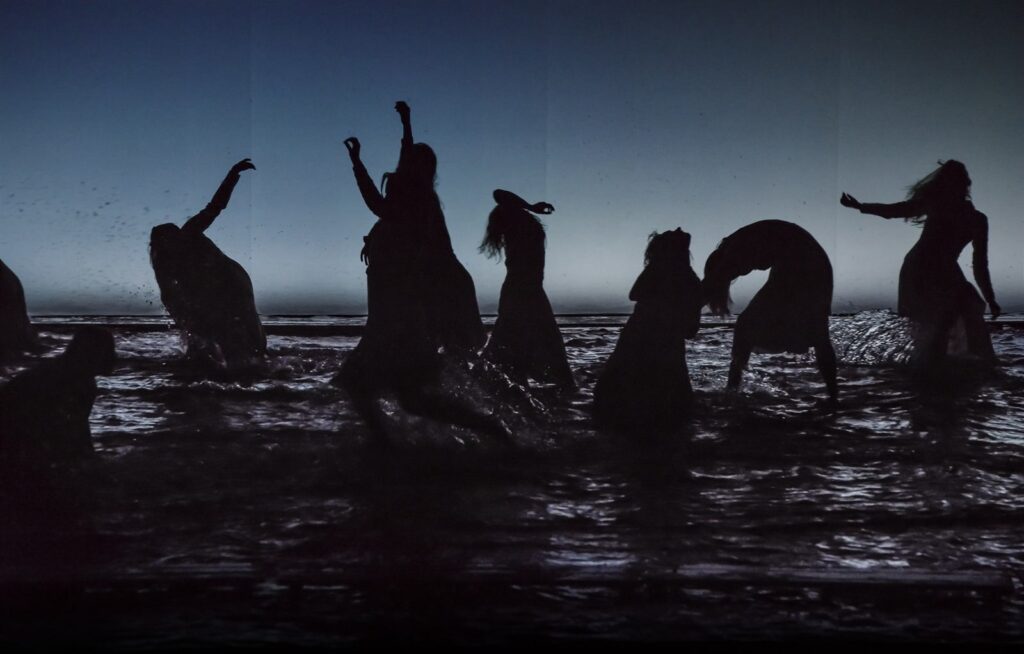





17. 11. 2026, 5 p.m.
FINAL PERFORMANCE
Janáček Theatre
Composer: Leoš Janáček
Conductor: Robert Kružík
Director: Jiří Heřman
Ensemble: Janáček Opera of the National Theatre Brno
The performance lasts 2 hours and 55 minutes, including one intermission (25 minutes).
17. 11. 2026
5 p.m.
FINAL PERFORMANCE
Janáček Theatre
Composer: Leoš Janáček
Conductor: Robert Kružík
Director: Jiří Heřman
Ensemble: Janáček Opera, National Theatre Brno
The performance lasts 2 hours and 55 minutes, including one intermission (25 minutes).

Other date of performance: 30. 9. 2026
Conductor: Robert Kružík
Musical Direction: Jakub Hrůša
Director: Jiří Heřman
Set Designer: Tomáš Rusín
Costume Designer: Zuzana Štefunková-Rusínová
Chorus Masters: Pavel Koňárek, Martin Buchta
Lighting Design: Jiří Heřman
Dramaturgy: Patricie Částková
Choreography: Jan Kodet
Cast:
Alexander Petrovich Goryanchikov – Roman Hoza
Luka (Filka Morozov) – Štefan Margita
Skuratov – Peter Berger
Shishkov – Károly Szemerédy
Prison Commandant – Jan Šťáva
Alyeya – Romana Kružíková
Prisoner – Zbigniew Malak
Prisoner / Blacksmith / Chekunov – Lukáš Bařák
Shapkin / Prisoner – Eduard Martyniuk
Prisoner / Kedril / Cherevin – Vít Nosek
Old Prisoner – Petr Levíček
Prisoner / Don Juan / Brahmin – Tadeáš Hoza
Chaplain – Josef Škarka
Cook – Kornél Mikecz
Prisoner – David Nykl
Prostitute – Jana Hrochová
Guard – Pavel Valenta
Luisa – Edit Antalová
Eagle – Michal Heriban
Alyeya’s Mother – Eva Novotná
Soprano – Kateřina Kněžíková
Alto – Romana Kružíková / Jana Hrochová
Tenor – Peter Berger / Eduard Martyniuk
Bass – Jan Šťáva / Josef Škarka
Part 1
A place at the end of the world…
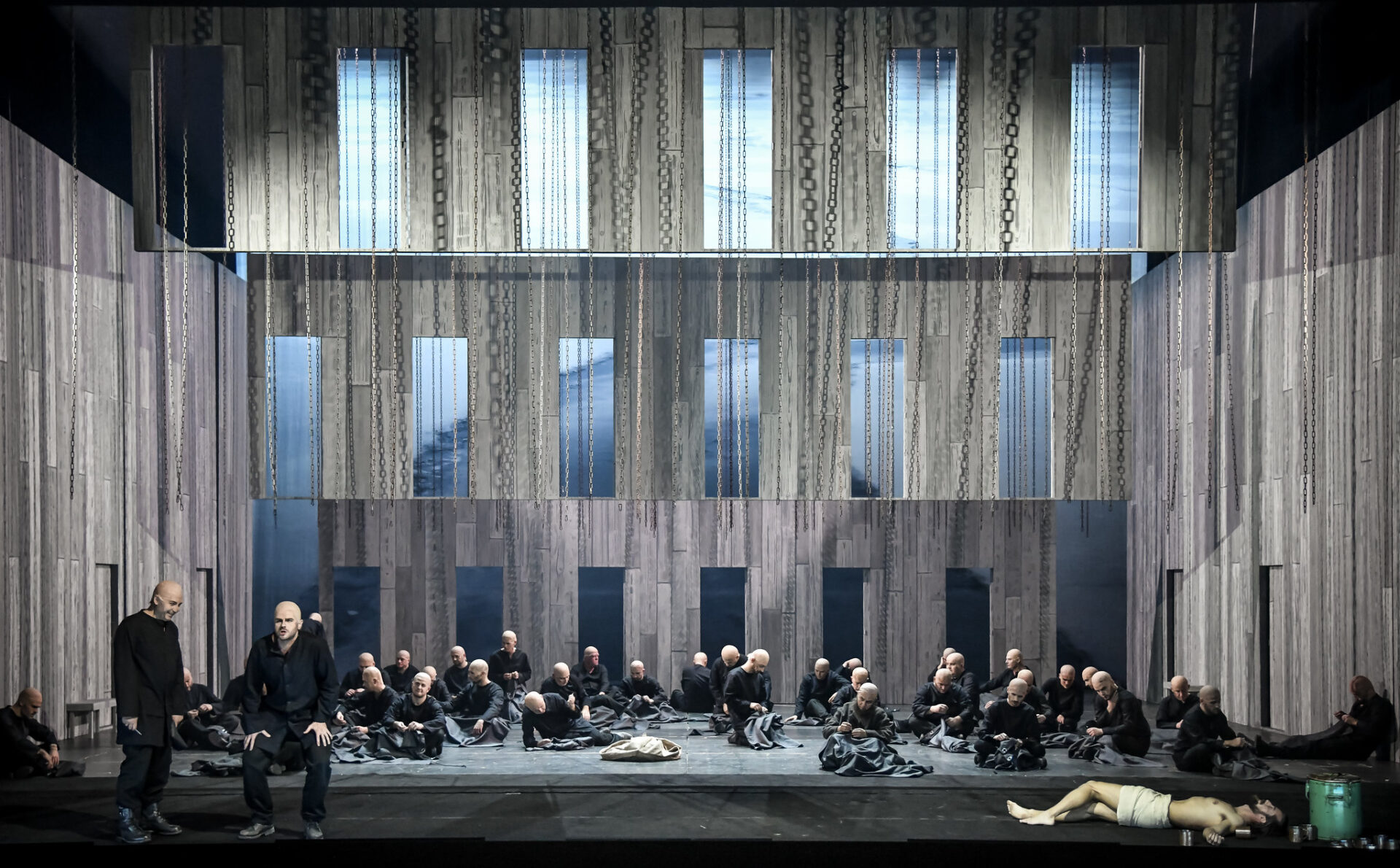
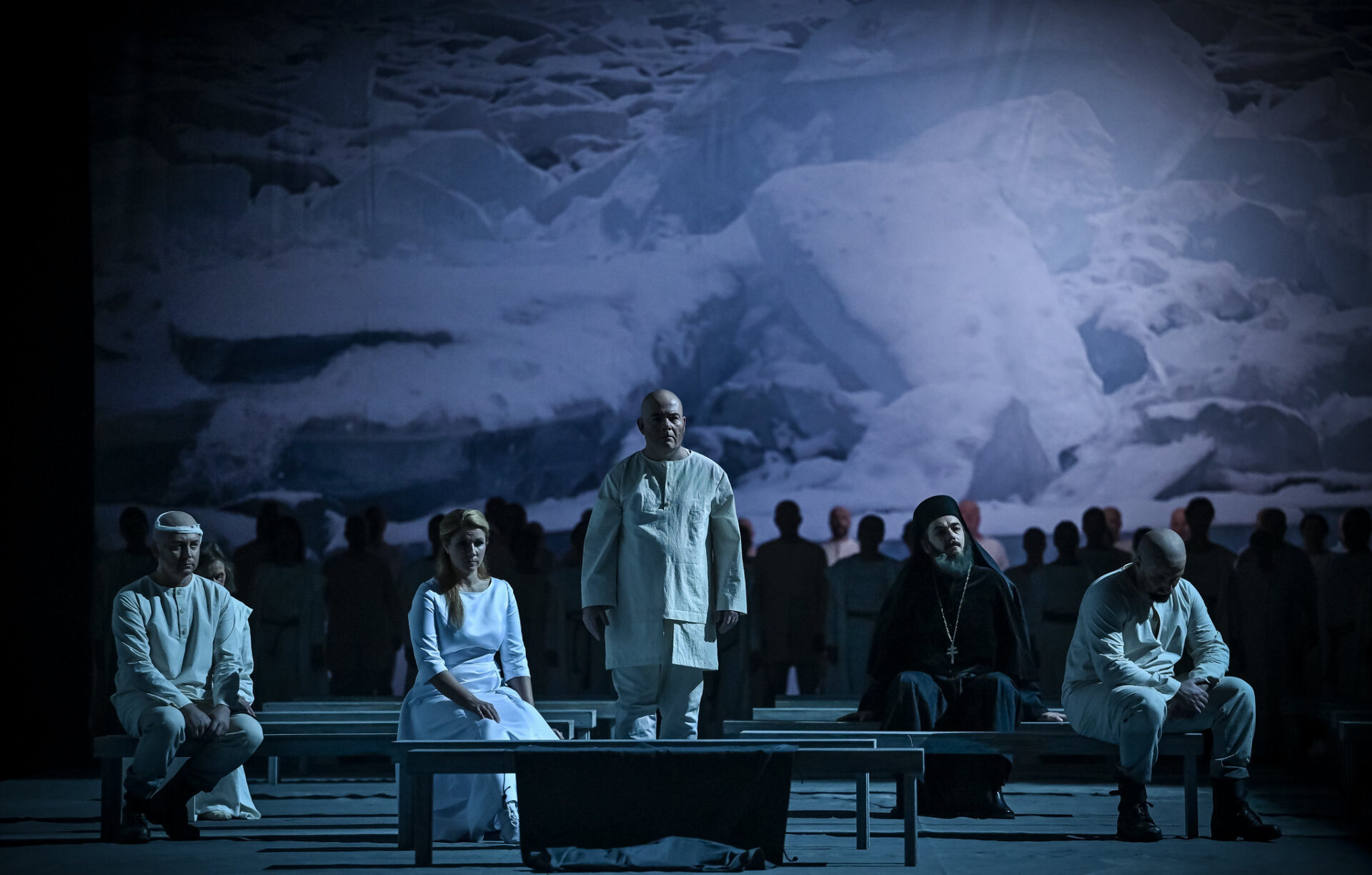
Another day begins, more suffering… a punishment for those who are guilty and those who are innocent but ended up here. Murderers, political prisoners, thieves and vagrants all brought together. A wounded eagle makes everyone long for lost freedom. Another convict is brought in, Goryanchikov. His declaration that he is a political prisoner only provokes cruelty from the prison governor. Snippets of narrative sound into the monotonous work. Skuratov reminisces about Moscow, Luka’s thoughts return to the murder of the Major. Another day somewhere at the end of Siberia is coming to an end…
It is summer and the prisoners are dismantling a shipwreck on the shores of the Irtysh. The Tatar boy Aljeja tells Goryanchik about his mother. A holiday, is a holiday! The monotony is broken by celebrations. Pop blesses the food and the prisoners prepare an impromptu theatre performance. Over the meal, Skuratov tells of his love for Lujza, for whom he killed her second suitor, an old German. The memories and longing for the women they have abandoned or harmed is omnipresent in the male world of the prison.
The play about Don Juan’s last day begins. The prisoners play with vigour the women and devils, which Juan eventually falls for. The theatre continues with a comedy about a beautiful miller cheating on her husband. But the feast ends tragically when Aljeja is injured in an argument by one of the prisoners.
Part 2
It is night, the sleep of the sick is full of restless dreams. Their actions will never cease to haunt them. The old man watches, prays and thinks of his children… he realizes that he will never see them again. Like most of the prisoners, he will never leave this place alive. Skuratov calls Lujza in his sleep. Shapkin, the vagrant, tells the others how he was caught stealing and the police commissioner pulled him out by his ears. Shishkov’s torn narrative turns into a confession and gradually reveals the story of an unhappy love for an innocent girl, Akulina, whose honour was tarnished by Filka Morozov out of revenge. Shishkov was married to her. After the wedding, he discovered that Filka’s accusation was false, but Akulka confessed that she still loved Filka and always would. Drunk Shishkov kills her. As he recounts his deed, Luka dies a short distance away. Shishkov recognises Filka in him. His rail against the dead is interrupted by the Old Man saying “His mother also gave birth…”
The guards call Goryanchikov. The prison governor tells him that he is released, his mother has begged a pardon for him. He is accompanied by the prisoners’ cries for freedom. “Run!” the guards shout. Goryanchikov is leaving for a new life. The others remain in a place of no return…
After death, souls wander on, carrying their guilt and remorse with them. Akulina, Lujza, Aljeja’s mother and other women bring compassion and forgiveness. Through them redemption can come.
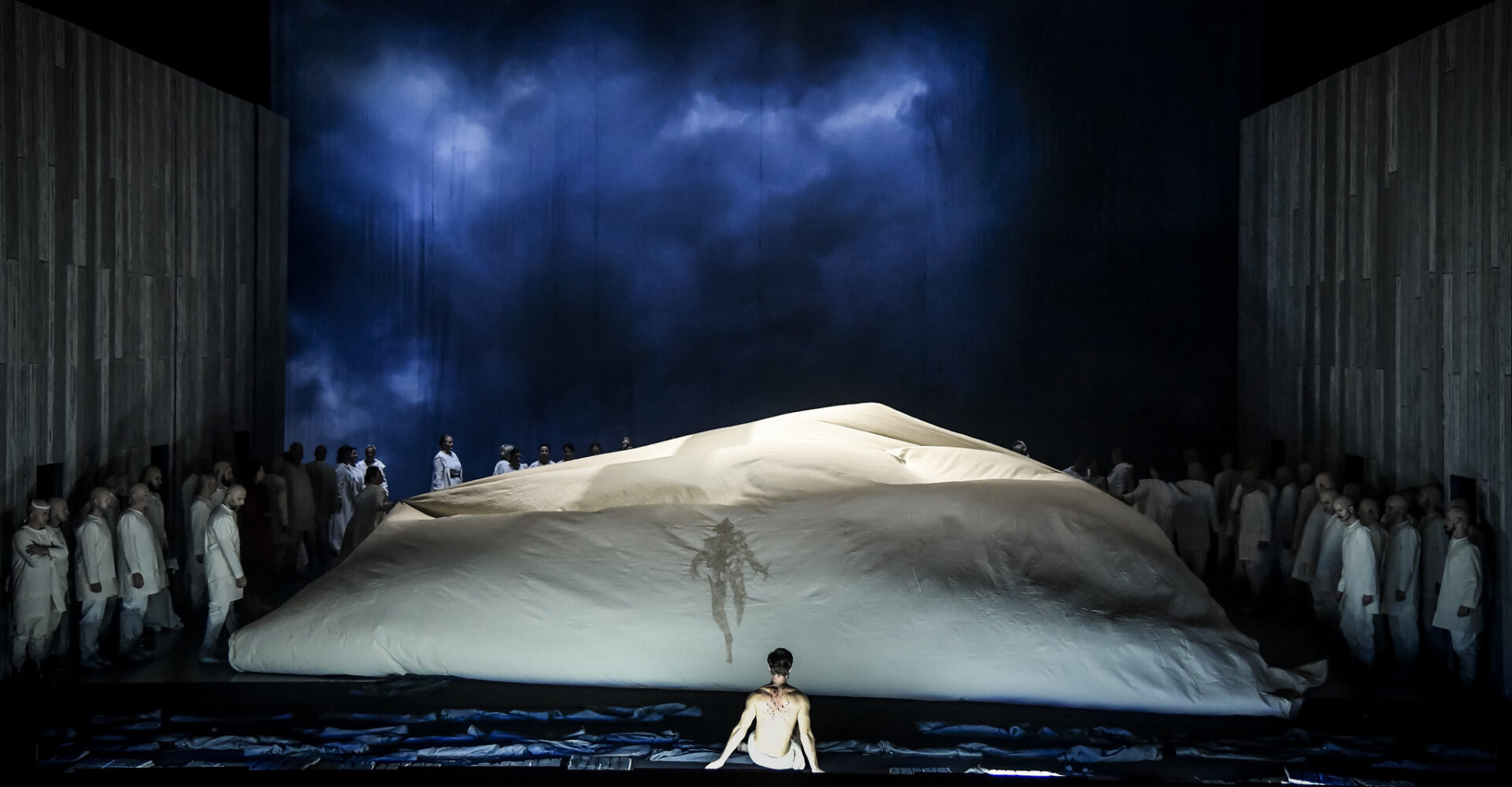
A unifying line runs through all Leoš Janáček’s compositions like a red thread – deep humanity and original form. This is perhaps the most applicable to his two last great works – the opera From the Dead House, an abbreviated probe into the souls of prisoners, and the Glagolitic Mass, a special expression of faith in a mass based on an Old Slavonic text. As part of the Janáček Brno 2022 festival, a unique combination of the two works was created, where the scenic form of the Glagolitic Mass as a continuation of the opera From the Dead House gives both works a new statement about the power of faith in man.
Exhausted and worn down – I am waiting to see if some star from the distant horizon will not fall into my mind, with a bell-like clang. Leoš Janáček turned to Russian literature for inspiration once again in the case of his ninth and last opera work. As in the case of Čapek´s play The Makropulos Case, at first glance Dostoevsky´s Notes from a Dead House seems in no way suitable as a theme for an opera. The writer himself spent time in a Siberian prison in the company of murderers, robbers and people who were simply led astray by an unfortunate turn of events, and drew from his experiences there when creating this literary work. It is a grim sequence of stories about everyday prison life and the fates of individual convicts, with psychological analysis and philosophical thoughts, but almost without dialogue, and with neither a central hero nor any female characters. Despite all the horrors described, Dostoevsky wrote to his brother: Believe me, there were among them deep, strong, beautiful natures, and it often gave me great joy to find gold under a rough exterior. Janáček also saw something deeper and more human in the individual characters of the book. In 1927 he mentions to Max Brod: I found a good human soul also in Baklushin, Petrov and Isai Fomich. Although he adapted the libretto from a Czech translation in the case of Katya Kabanova, this time he worked directly with Dostoyevsky’s Russian original, and his copy is full of notes and underlined parts of the text. The libretto has never been found, except for a brief draft, and it is believed that Janáček wrote it directly into the score. And this wasn´t an easy and joyful task, as can be sensed from his letters to Kamila Stösslová: It seems to me that I am walking down steps, lower and lower, down to the bottom where humanity´s poorest people dwell. And it is a hard walk.
However, Janáček didn´t have time to finish the work. He took the score of Act 3 to Hukvaldy in the summer, but caught pneumonia and died on 12th August 1928 in a sanatorium in Ostrava. His pioneering work remained unfinished. Before the opera was staged at the Brno theatre, Janáček´s pupils, the conductors Břetislav Bakala and Osvald Chlubna, took charge of the completion of the instrumentation and small adaptations of the singing parts. A change was also made to the gloomy conclusion of the opera, when after Gorianchikov’s departure the guards chase the prisoners back and life in the house of the dead continues relentlessly. In later years, producers began returning to the ending originally intended by Janáček. For the first time in the Czech Republic, the festival production will present a new critical edition by Prof. John Tyrrell which reconstructs the work as closely as possible to the form Janáček intended but never had the opportunity to finish.
Despite the oppressive end, at the beginning of the score of The House of the Dead Janáček wrote: In every creature a spark of God! And this is the idea connecting his last opera with an equally unique work – a mass with a text in Old Slavonic. The origin of the Glagolitic Mass is partly intertwined with Janáček’s work on his last opera, and it is a captivating confession. As Janáček himself said: I wanted to capture here faith in the security of the nation not on a religious basis, but on a moral, strong one, which takes God as a witness. The theatre version of the Glagolitic Mass as a continuation of the opera imbues both works with a new testimony about the power of faith in man.
Premiere: 2 November 2022 at the Janáček Theatre
Performed in the original Czech version with Czech, English, and German surtitles.
Conductor: Robert Kružík
Musical Direction: Jakub Hrůša
Director: Jiří Heřman
Set Designer: Tomáš Rusín
Costume Designer: Zuzana Štefunková-Rusínová
Chorus Masters: Pavel Koňárek, Martin Buchta
Lighting Design: Jiří Heřman
Dramaturgy: Patricie Částková
Choreography: Jan Kodet
Cast:
Alexander Petrovich Goryanchikov – Roman Hoza
Luka (Filka Morozov) – Štefan Margita
Skuratov – Peter Berger
Shishkov – Károly Szemerédy
Prison Commandant – Jan Šťáva
Alyeya – Romana Kružíková
Prisoner – Zbigniew Malak
Prisoner / Blacksmith / Chekunov – Lukáš Bařák
Shapkin / Prisoner – Eduard Martyniuk
Prisoner / Kedril / Cherevin – Vít Nosek
Old Prisoner – Petr Levíček
Prisoner / Don Juan / Brahmin – Tadeáš Hoza
Chaplain – Josef Škarka
Cook – Kornél Mikecz
Prisoner – David Nykl
Prostitute – Jana Hrochová
Guard – Pavel Valenta
Luisa – Edit Antalová
Eagle – Michal Heriban
Alyeya’s Mother – Eva Novotná
Soprano – Kateřina Kněžíková
Alto – Romana Kružíková / Jana Hrochová
Tenor – Peter Berger / Eduard Martyniuk
Bass – Jan Šťáva / Josef Škarka
Part 1
A place at the end of the world…
Another day begins, more suffering… a punishment for those who are guilty and those who are innocent but ended up here. Murderers, political prisoners, thieves and vagrants all brought together. A wounded eagle makes everyone long for lost freedom. Another convict is brought in, Goryanchikov. His declaration that he is a political prisoner only provokes cruelty from the prison governor. Snippets of narrative sound into the monotonous work. Skuratov reminisces about Moscow, Luka’s thoughts return to the murder of the Major. Another day somewhere at the end of Siberia is coming to an end…
It is summer and the prisoners are dismantling a shipwreck on the shores of the Irtysh. The Tatar boy Aljeja tells Goryanchik about his mother. A holiday, is a holiday! The monotony is broken by celebrations. Pop blesses the food and the prisoners prepare an impromptu theatre performance. Over the meal, Skuratov tells of his love for Lujza, for whom he killed her second suitor, an old German. The memories and longing for the women they have abandoned or harmed is omnipresent in the male world of the prison.
The play about Don Juan’s last day begins. The prisoners play with vigour the women and devils, which Juan eventually falls for. The theatre continues with a comedy about a beautiful miller cheating on her husband. But the feast ends tragically when Aljeja is injured in an argument by one of the prisoners.
Part 2
It is night, the sleep of the sick is full of restless dreams. Their actions will never cease to haunt them. The old man watches, prays and thinks of his children… he realizes that he will never see them again. Like most of the prisoners, he will never leave this place alive. Skuratov calls Lujza in his sleep. Shapkin, the vagrant, tells the others how he was caught stealing and the police commissioner pulled him out by his ears. Shishkov’s torn narrative turns into a confession and gradually reveals the story of an unhappy love for an innocent girl, Akulina, whose honour was tarnished by Filka Morozov out of revenge. Shishkov was married to her. After the wedding, he discovered that Filka’s accusation was false, but Akulka confessed that she still loved Filka and always would. Drunk Shishkov kills her. As he recounts his deed, Luka dies a short distance away. Shishkov recognises Filka in him. His rail against the dead is interrupted by the Old Man saying “His mother also gave birth…”
The guards call Goryanchikov. The prison governor tells him that he is released, his mother has begged a pardon for him. He is accompanied by the prisoners’ cries for freedom. “Run!” the guards shout. Goryanchikov is leaving for a new life. The others remain in a place of no return…
After death, souls wander on, carrying their guilt and remorse with them. Akulina, Lujza, Aljeja’s mother and other women bring compassion and forgiveness. Through them redemption can come.
A unifying line runs through all Leoš Janáček’s compositions like a red thread – deep humanity and original form. This is perhaps the most applicable to his two last great works – the opera From the Dead House, an abbreviated probe into the souls of prisoners, and the Glagolitic Mass, a special expression of faith in a mass based on an Old Slavonic text. As part of the Janáček Brno 2022 festival, a unique combination of the two works was created, where the scenic form of the Glagolitic Mass as a continuation of the opera From the Dead House gives both works a new statement about the power of faith in man.
Exhausted and worn down – I am waiting to see if some star from the distant horizon will not fall into my mind, with a bell-like clang. Leoš Janáček turned to Russian literature for inspiration once again in the case of his ninth and last opera work. As in the case of Čapek´s play The Makropulos Case, at first glance Dostoevsky´s Notes from a Dead House seems in no way suitable as a theme for an opera. The writer himself spent time in a Siberian prison in the company of murderers, robbers and people who were simply led astray by an unfortunate turn of events, and drew from his experiences there when creating this literary work. It is a grim sequence of stories about everyday prison life and the fates of individual convicts, with psychological analysis and philosophical thoughts, but almost without dialogue, and with neither a central hero nor any female characters. Despite all the horrors described, Dostoevsky wrote to his brother: Believe me, there were among them deep, strong, beautiful natures, and it often gave me great joy to find gold under a rough exterior. Janáček also saw something deeper and more human in the individual characters of the book. In 1927 he mentions to Max Brod: I found a good human soul also in Baklushin, Petrov and Isai Fomich. Although he adapted the libretto from a Czech translation in the case of Katya Kabanova, this time he worked directly with Dostoyevsky’s Russian original, and his copy is full of notes and underlined parts of the text. The libretto has never been found, except for a brief draft, and it is believed that Janáček wrote it directly into the score. And this wasn´t an easy and joyful task, as can be sensed from his letters to Kamila Stösslová: It seems to me that I am walking down steps, lower and lower, down to the bottom where humanity´s poorest people dwell. And it is a hard walk. ¨
However, Janáček didn´t have time to finish the work. He took the score of Act 3 to Hukvaldy in the summer, but caught pneumonia and died on 12th August 1928 in a sanatorium in Ostrava. His pioneering work remained unfinished. Before the opera was staged at the Brno theatre, Janáček´s pupils, the conductors Břetislav Bakala and Osvald Chlubna, took charge of the completion of the instrumentation and small adaptations of the singing parts. A change was also made to the gloomy conclusion of the opera, when after Gorianchikov’s departure the guards chase the prisoners back and life in the house of the dead continues relentlessly. In later years, producers began returning to the ending originally intended by Janáček. For the first time in the Czech Republic, the festival production will present a new critical edition by Prof. John Tyrrell which reconstructs the work as closely as possible to the form Janáček intended but never had the opportunity to finish.
Despite the oppressive end, at the beginning of the score of The House of the Dead Janáček wrote: In every creature a spark of God! And this is the idea connecting his last opera with an equally unique work – a mass with a text in Old Slavonic. The origin of the Glagolitic Mass is partly intertwined with Janáček’s work on his last opera, and it is a captivating confession. As Janáček himself said: I wanted to capture here faith in the security of the nation not on a religious basis, but on a moral, strong one, which takes God as a witness. The theatre version of the Glagolitic Mass as a continuation of the opera imbues both works with a new testimony about the power of faith in man.






Don’t miss at the festival