




31. 10. 2026, 3 p.m.
Janáček Theatre
Composer: Leoš Janáček
Conductor: Ondrej Olos
Director: Robert Carsen
Ensemble: Janáček Opera of the National Theatre Brno
The performance lasts 2 hours and 15 minutes, including one intermission (25 minutes).
The licence is owned by the Opera Vlaanderen, Antwerp/Gent.
31. 10. 2026
3 p.m.
Janáček Theatre
Composer: Leoš Janáček
Conductor: Ondrej Olos
Director: Robert Carsen
Ensemble: Janáček Opera of the National Theatre Brno
The performance lasts 2 hours and 15 minutes, including one intermission (25 minutes).
The licence is owned by the Opera Vlaanderen, Antwerp/Gent.
Conductor: Ondrej Olos
Director: Rober Carsen
Scene: Patrick Kinmonth
Costumes: Patrick Kinmonth
Lights: Robert Carsen, Peter van Praet
Choreography: Philippe Giraudeau
Choirmaster: Pavel Koňárek
Dramaturgy: Patricie Částková
Cast:
Katya – Kateřina Kněžíková
Boris Grigoryevich – Peter Berger
Tikhon Ivanich Kabanov – Aleš Briscein
Varvara – Václava Krejčí Housková
Savel Prokofievich Dikoy – Jan Šťáva
Kabanicha – Jana Hrochová
Vanya Kudryash – Vít Nosek
Kuligin – Tadeáš Hoza
Glasha – Jitka Klečanská
Feklusha – Hana Kopřivová
Woman from the People – Hana Mikulková
Act I
The young teacher Kudrjaš admires the wide landscape and the Volga River. The calm afternoon is interrupted by the angry outburst of the merchant Dikoj towards his nephew Boris. Kudrjaš wonders why Boris tolerates his uncle’s rudeness. Boris admits that he is unhappy in Kalinov but has no choice: according to his grandmother’s will, he and his sister must live with their uncle and endure his cruelty until they come of age, if they are to receive their inheritance. His misery is deepened by hopeless love for a married woman – Katya Kabanova. Katya too is unhappy in her marriage. Raised in a loving family, she now has a weak, drunken husband and a tyrannical mother-in-law, who despises her and envies Tichon’s love for her. Kabanicha orders her son to leave immediately for the market in Kazan and reproaches him for his lack of filial love and obedience.
Evening in the Kabanov household. Katya and Varvara are embroidering, and Katya recalls the happy days of her youth. She confesses that she has secretly fallen in love, and the carefree Varvara offers to act as a go-between. Tichon comes to say farewell to his wife. Katya begs him to take her with him or at least bind her with an oath of fidelity. He does not understand and refuses. Kabanicha oversees their farewell and, on her command, Tichon humiliates Katya with degrading admonitions.
Act II
Kabanicha scolds Katya for not showing enough sorrow at Tichon’s departure. Varvara brings a key to the garden gate, stolen from Kabanicha, so that she can meet Kudrjaš. She persuades Katya to accept it. The drunken Dikoj visits Kabanicha and begs for her favour.
In the ravine behind the Kabanovs’ garden, Varvara meets Kudrjaš. At her invitation, Boris also arrives. Katya struggles against her feelings for Boris but finally falls into his arms.
Act III
A violent storm breaks over the town. People seek refuge in the ruins of a burned-out monastery. Kudrjaš seizes the chance to propose his idea of installing lightning conductors, but for Dikoj the storm is a sign of divine wrath, and he dismisses the suggestion with insults. Varvara seeks out Boris and tells him that since Tichon returned, Katya has been acting as if out of her mind. The Kabanov family also takes shelter in the ruins. Terrified by the storm, Katya publicly confesses her adultery with Boris. Kabanicha triumphs. Tichon wants to forgive her, but Katya flees.
Glasha and Tichon search in vain for Katya. Varvara is also determined to leave the family home and agrees with Kudrjas to elope to Moscow. Katya goes to the banks of the Volga having made up her mind that the only freedom from her unbearable life is death, but wishes to say farewell to Boris. He arrives with the news that his uncle has sent him to run his business in Siberia, and after his departure Katya throws herself into the depths of the Volga.
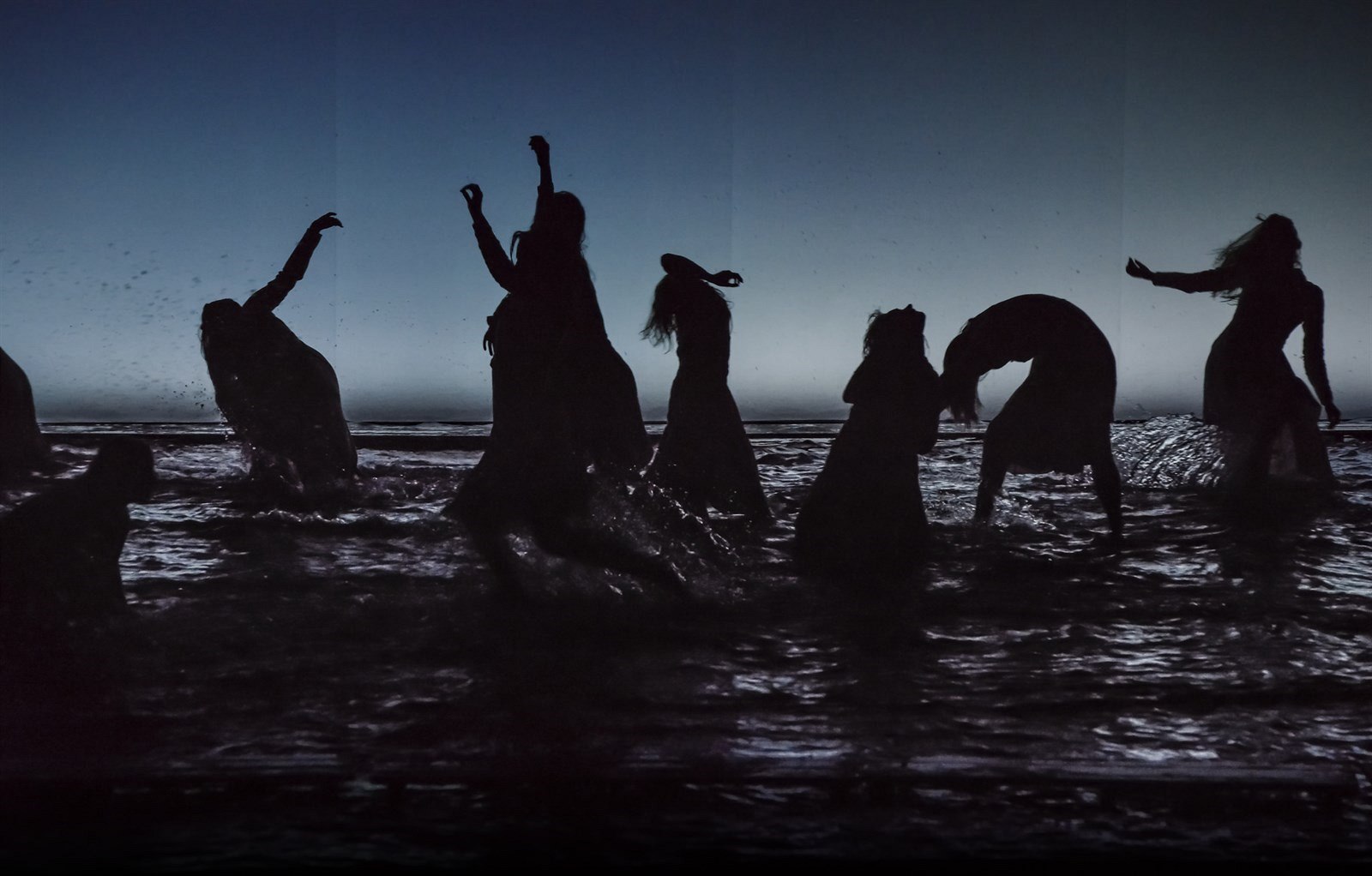
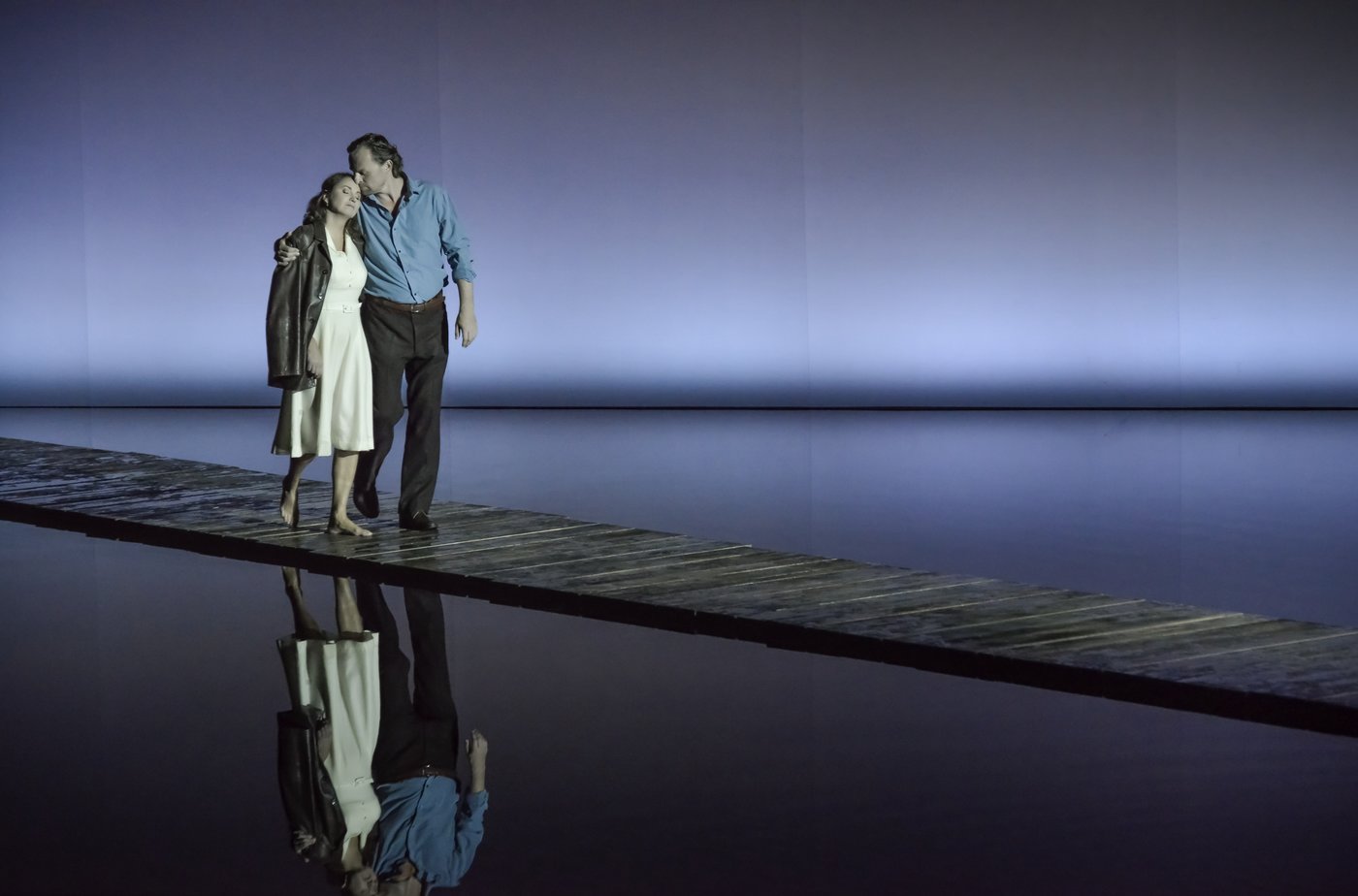
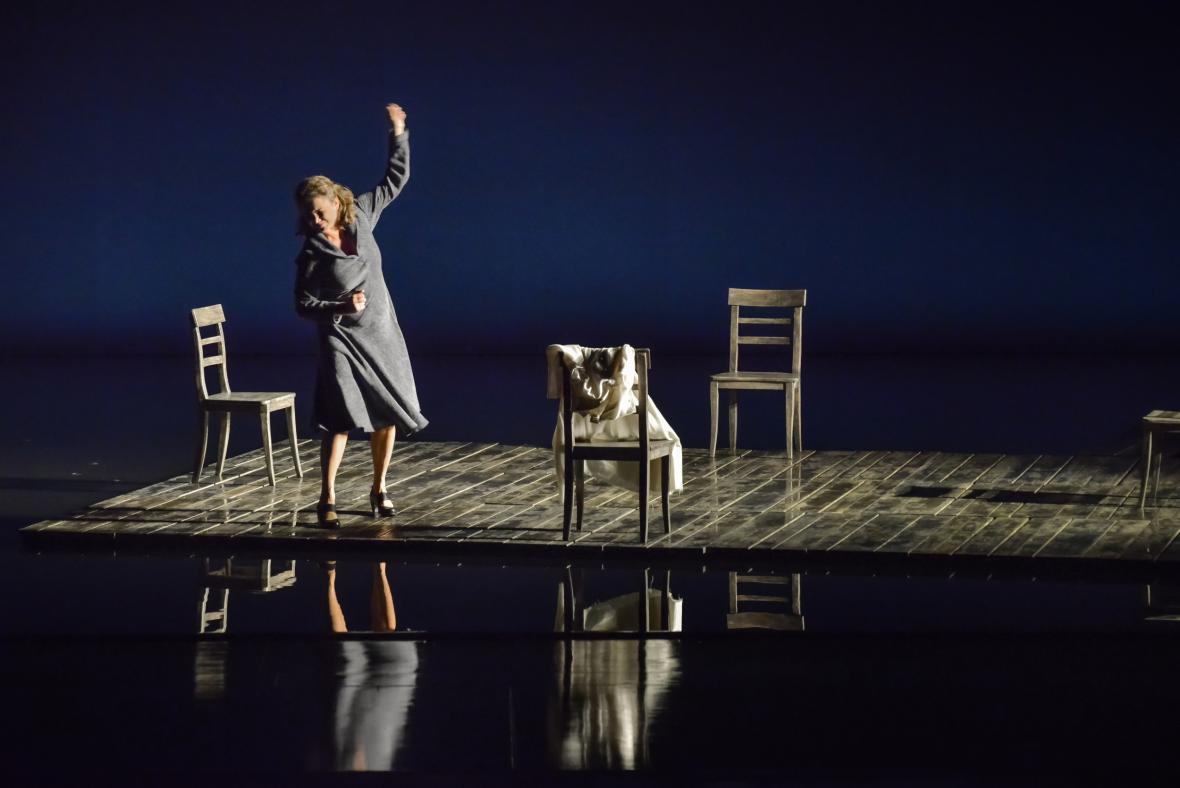
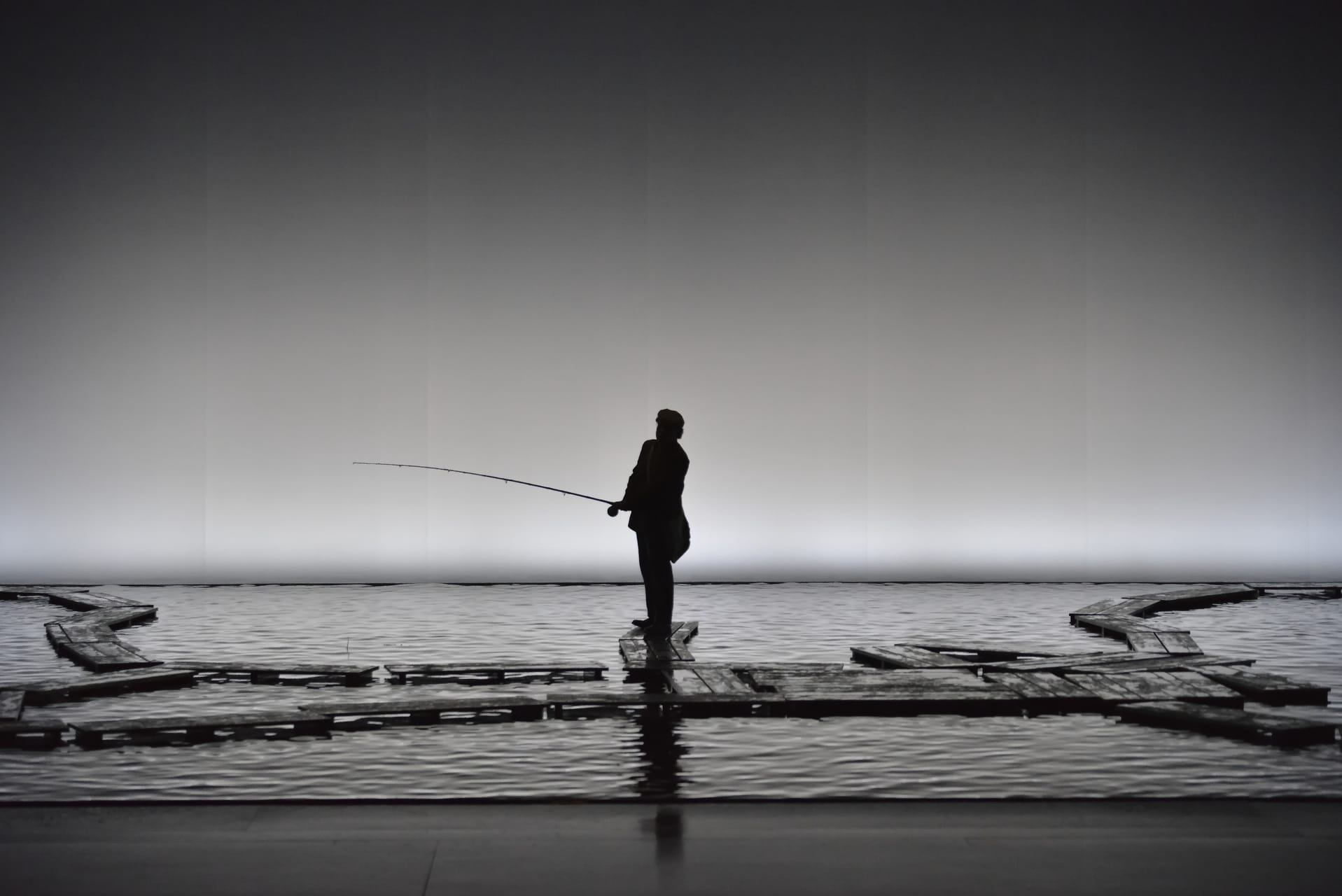
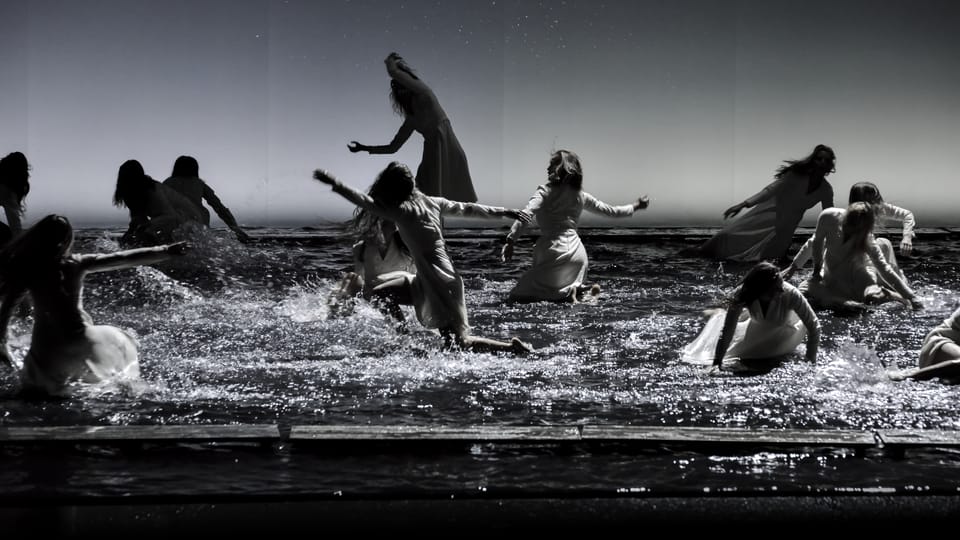
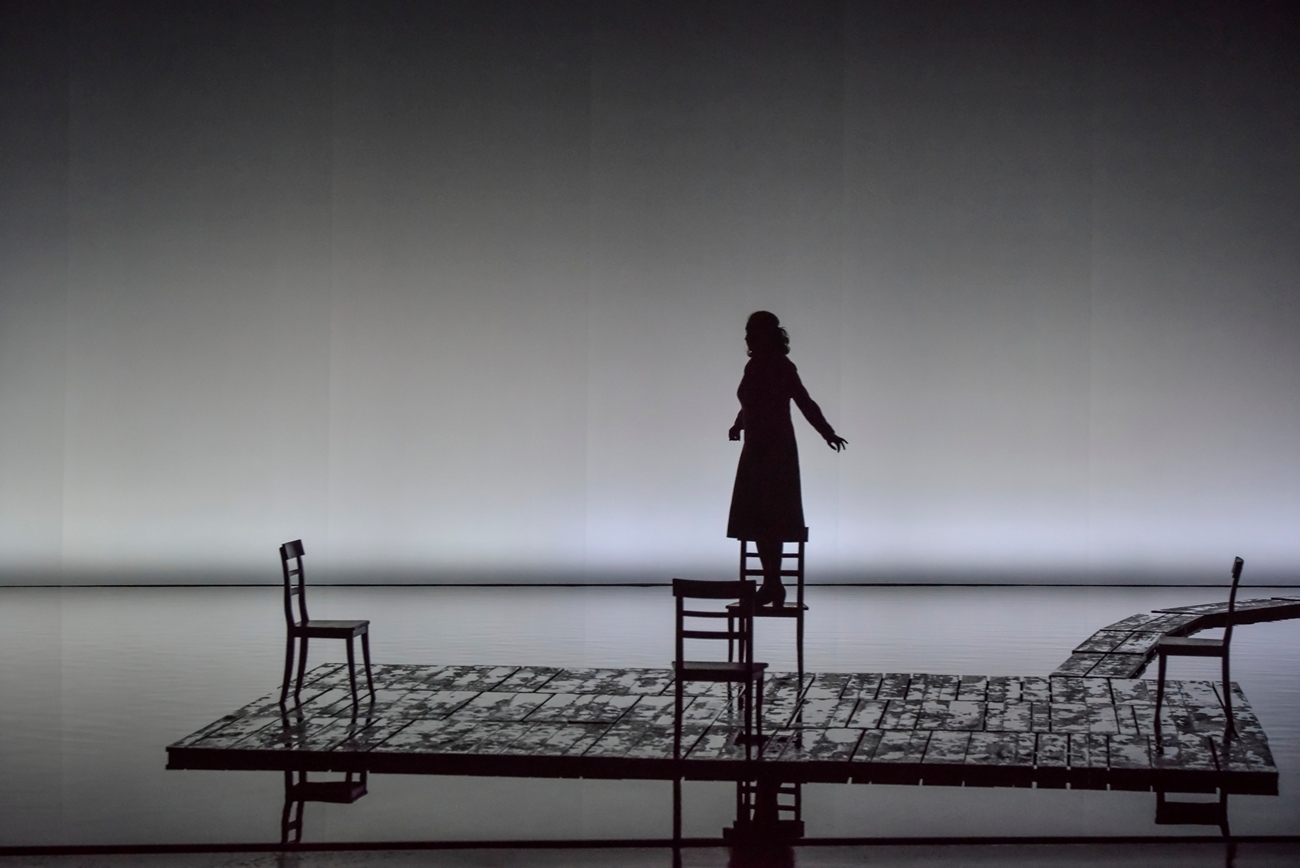
The premiere of the production of Káťa Kabanová by National Theatre Brno’s Janáček opera ensemble was one of the highlights of the last festival. Now it is returning so that Janáček´s genius can again meet on stage with one of the best living opera directors, Robert Carsen, whose productions excel in their distinct poeticism, dramaturgical tightness and emotive, lively and immensely impressive theatre. His work has appeared in the repertoire of the most important opera houses worldwide, such as La Scala in Milan, the Metropolitan Opera in New York and the Royal Opera House in Covent Garden, London, along with England’s Glyndebourne festival. Káťa Kabanová is one of Carsen´s five productions of Janáček´s operas, originally created for the Flemish Opera. It has been performed in more than 20 opera houses around the world since its premiere, which is not surprising as the production, with its impressive set in which the whole stage is covered by water which mirrors Káťa´s emotions as well as her tragic end, is one of Carsen’s best works.
When Janáček started thinking about Ostrovsky´s drama The Storm as a theme for his new opera, his sixty-fifth birthday was coming close. During the last three years, many things had changed in his life; he had finally gained international recognition and had got to know Kamila Stösslová in Luhačovice in the summer of 1917, a lady who was a source of inspiration for his most significant works. It isn´t surprising that he chose a theme from Russian literature like The Storm, which was close to Janáček’s heart due to its tragic theme of a main heroine, Káťa, oppressed by social conventions. Janáček created the libretto himself, using the Czech translation of The Storm, but he altered the original significantly, reducing the number of characters and acts, and focusing mainly on the drama around the main heroine. He thus created one of his most intimate works. Janáček assigned the first performance and thus world premiere to National Theatre Brno, where the opera was performed at the Na hradbách theatre on 23rd November 1921. It met with extraordinary success, being performed in Prague one year later and shortly afterwards also abroad.
Conductor: Ondrej Olos
Director: Rober Carsen
Scene: Patrick Kinmonth
Costumes: Patrick Kinmonth
Lights: Robert Carsen, Peter van Praet
Choreography: Philippe Giraudeau
Choirmaster: Pavel Koňárek
Dramaturgy: Patricie Částková
Cast:
Katya – Kateřina Kněžíková
Boris Grigoryevich – Peter Berger
Tikhon Ivanich Kabanov – Aleš Briscein
Varvara – Václava Krejčí Housková
Savel Prokofievich Dikoy – Jan Šťáva
Kabanicha – Jana Hrochová
Vanya Kudryash – Vít Nosek
Kuligin – Tadeáš Hoza
Glasha – Jitka Klečanská
Feklusha – Hana Kopřivová
Woman from the People – Hana Mikulková
Act I
The young teacher Kudrjaš admires the wide landscape and the Volga River. The calm afternoon is interrupted by the angry outburst of the merchant Dikoj towards his nephew Boris. Kudrjaš wonders why Boris tolerates his uncle’s rudeness. Boris admits that he is unhappy in Kalinov but has no choice: according to his grandmother’s will, he and his sister must live with their uncle and endure his cruelty until they come of age, if they are to receive their inheritance. His misery is deepened by hopeless love for a married woman – Katya Kabanova. Katya too is unhappy in her marriage. Raised in a loving family, she now has a weak, drunken husband and a tyrannical mother-in-law, who despises her and envies Tichon’s love for her. Kabanicha orders her son to leave immediately for the market in Kazan and reproaches him for his lack of filial love and obedience.
Evening in the Kabanov household. Katya and Varvara are embroidering, and Katya recalls the happy days of her youth. She confesses that she has secretly fallen in love, and the carefree Varvara offers to act as a go-between. Tichon comes to say farewell to his wife. Katya begs him to take her with him or at least bind her with an oath of fidelity. He does not understand and refuses. Kabanicha oversees their farewell and, on her command, Tichon humiliates Katya with degrading admonitions.
Act II
Kabanicha scolds Katya for not showing enough sorrow at Tichon’s departure. Varvara brings a key to the garden gate, stolen from Kabanicha, so that she can meet Kudrjaš. She persuades Katya to accept it. The drunken Dikoj visits Kabanicha and begs for her favour.
In the ravine behind the Kabanovs’ garden, Varvara meets Kudrjaš. At her invitation, Boris also arrives. Katya struggles against her feelings for Boris but finally falls into his arms.
Act III
A violent storm breaks over the town. People seek refuge in the ruins of a burned-out monastery. Kudrjaš seizes the chance to propose his idea of installing lightning conductors, but for Dikoj the storm is a sign of divine wrath, and he dismisses the suggestion with insults. Varvara seeks out Boris and tells him that since Tichon returned, Katya has been acting as if out of her mind. The Kabanov family also takes shelter in the ruins. Terrified by the storm, Katya publicly confesses her adultery with Boris. Kabanicha triumphs. Tichon wants to forgive her, but Katya flees.
Glasha and Tichon search in vain for Katya. Varvara is also determined to leave the family home and agrees with Kudrjas to elope to Moscow. Katya goes to the banks of the Volga having made up her mind that the only freedom from her unbearable life is death, but wishes to say farewell to Boris. He arrives with the news that his uncle has sent him to run his business in Siberia, and after his departure Katya throws herself into the depths of the Volga.
The premiere of the production of Káťa Kabanová by National Theatre Brno’s Janáček opera ensemble was one of the highlights of the last festival. Now it is returning so that Janáček´s genius can again meet on stage with one of the best living opera directors, Robert Carsen, whose productions excel in their distinct poeticism, dramaturgical tightness and emotive, lively and immensely impressive theatre. His work has appeared in the repertoire of the most important opera houses worldwide, such as La Scala in Milan, the Metropolitan Opera in New York and the Royal Opera House in Covent Garden, London, along with England’s Glyndebourne festival. Káťa Kabanová is one of Carsen´s five productions of Janáček´s operas, originally created for the Flemish Opera. It has been performed in more than 20 opera houses around the world since its premiere, which is not surprising as the production, with its impressive set in which the whole stage is covered by water which mirrors Káťa´s emotions as well as her tragic end, is one of Carsen’s best works.
When Janáček started thinking about Ostrovsky´s drama The Storm as a theme for his new opera, his sixty-fifth birthday was coming close. During the last three years, many things had changed in his life; he had finally gained international recognition and had got to know Kamila Stösslová in Luhačovice in the summer of 1917, a lady who was a source of inspiration for his most significant works. It isn´t surprising that he chose a theme from Russian literature like The Storm, which was close to Janáček’s heart due to its tragic theme of a main heroine, Káťa, oppressed by social conventions. Janáček created the libretto himself, using the Czech translation of The Storm, but he altered the original significantly, reducing the number of characters and acts, and focusing mainly on the drama around the main heroine. He thus created one of his most intimate works. Janáček assigned the first performance and thus world premiere to National Theatre Brno, where the opera was performed at the Na hradbách theatre on 23rd November 1921. It met with extraordinary success, being performed in Prague one year later and shortly afterwards also abroad.