






18. 10. 2026, 3 p.m.
Reduta Theatre – Mozart Hall
Choirmaster: Valeria Maťašová
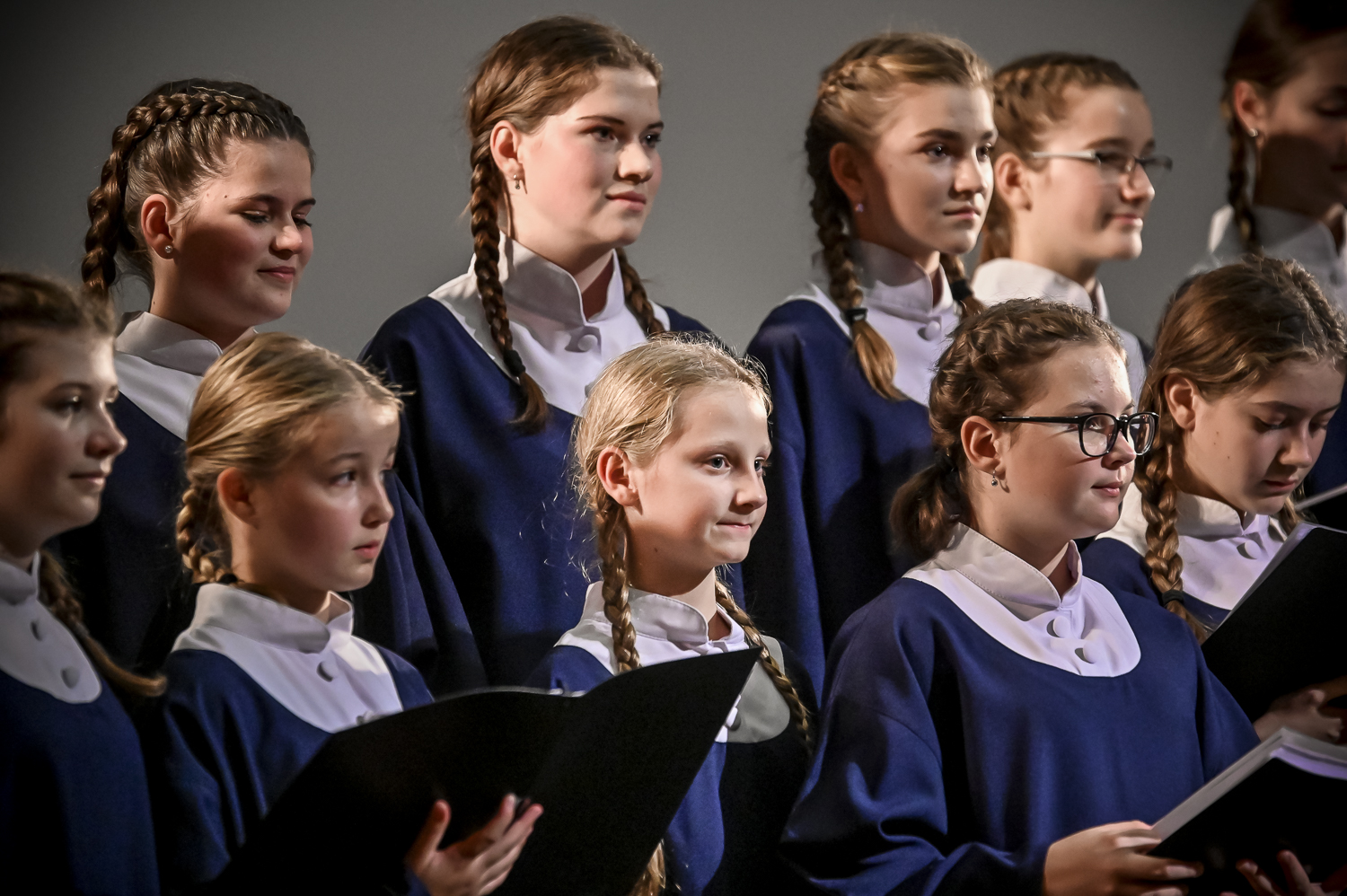
Brno Children’s Choir
18. 10. 2026
3 p.m.
Reduta Theatre – Mozart Hall
Choir: Brno Children’s Choir
Choirmaster: Valeria Maťašová
Luboš Fišer: Fašank for children’s choir and piano to texts of Moravian folk poetry
Miloslav Kabeláč: To Nature. Cycle of children’s choir compositions to folk texts with piano accompaniment, Op. 35
Leoš Janáček: Folk Nocturnes. Evening songs of Slovak folk from Rovné, JW IV/32
Bohuslav Martinů: Špalíček, H. 214 (selection from the version for children’s choir and piano)
Children’s singing has always been a natural part of folk customs, games, and festivities. The unique timbre of children’s voices inspired many leading Czech composers of the 20th century, who found in simple folk texts an apt musical expression through the pure and unspoiled sound of the child’s voice.
Luboš Fišer (1935–1999) was known not only as a prolific composer of film music but also as an internationally acclaimed author of orchestral, chamber, and vocal compositions. His distinctive postmodern style is marked by romantic, sometimes exalted expressiveness, contrasted with folk-like or even deliberately banal tunes. Such qualities are also present in Fašank for children’s choir and piano, composed in 1982 for the ensemble Bambini di Praga to Moravian folk texts.
Although symphonic music lies at the centre of Miloslav Kabeláč’s (1908–1979) oeuvre, his compositions for children also reveal his interest in this field. His cycle To Nature, Op. 35, written in 1957–1958, sets folk verses that reflect the varied relationship between humankind and Mother Nature.
Leoš Janáček’s (1854–1928) Folk Nocturnes are based on affecting two-part songs of young girls that the composer noted down in September 1901 in Makov, near Velké Rovné in Slovakia. Five years later he added an original piano accompaniment in his unmistakable style. In doing so, he captured for future generations the unrepeatable atmosphere of songs that “float over the mountain peaks, fall into the valleys, and fade away beyond the water in the dark forests.”
The three-act ballet Špalíček grew out of Bohuslav Martinů’s (1890–1959) fascination with folk games and nursery rhymes. Composed in Paris in 1931–1932, its texts were drawn from collections by Karel Jaromír Erben, Božena Němcová, František Bartoš, and Leoš Janáček. With captivating music, Martinů opens up a fascinating world of children’s games, legends, fairy tales, folk customs, and nursery rhymes of the Czech and Moravian countryside.
Text: Ondřej Pivoda