




15. 10. 2026, 7 p.m.
Janáček Theatre
Author: Leoš Janáček
Conductor: Marko Ivanović
Director: Robert Carsen
Ensemble: Janáček Opera of the National Theatre Brno
Co-production: Teatro Real, Madrid; Staatsoper Unter den Linden, Berlin
The performance lasts 2 hours and 50 minutes, including one intermission (25 minutes).
15. 10. 2026, 7 p.m.
Janáček Theatre
Author: Leoš Janáček
Conductor: Marko Ivanović
Director: Robert Carsen
Ensemble: Janáček Opera of the National Theatre Brno
Co-production: Teatro Real, Madrid; Staatsoper Unter den Linden, Berlin
The performance lasts 2 hours and 50 minutes, including one intermission (25 minutes).

Director: Robert Carsen
Conductor: Marko Ivanović
Scene: Radu Boruzescu
Costumes: Annemarie Woods
Lights: Robert Carsen / Peter van Praet
Choreography: Rebecca Howell
Dramaturgy: Robert Carsen / Patricie Částková
Chorus director: Martin Buchta (The Excursion of Mr. Brouček to the Moon)
Chorus director: Pavel Koňárek (The Excursion of Mr. Brouček to the 15. Century)
Cast:
Matěj Brouček – Nicky Spence
Mazal / Blankytný / Petřík – Daniel Matoušek
Sacristan at St. Vitus Cathedral / Lunobor / Domšík of the Bell – David Szendiuch
Málinka / Etherea / Kunka – Doubravka Novotná
Würfl / Čaroskvoucí / Councillor – Jan Šťáva
Little Waiter / Child Prodigy / Student: – Andrea Široká
Kedruta – Jana Horáková Levicová
Svatopluk Čech – Daniel Kfelíř
Poet / Cloudy / Vacek Bradatý / Other voice – Tadeáš Hoza
Painter / Duhoslav / Vojta of Peacokcs / Voice of the Professor – Vít Nosek
Composer / Harpoboy / Miroslav the Goldsmith – Ondřej Koplík
First Taborite – Petr Karas
Second Taborite / Another Poet (Moon part) – Pavel Valenta
Part 1
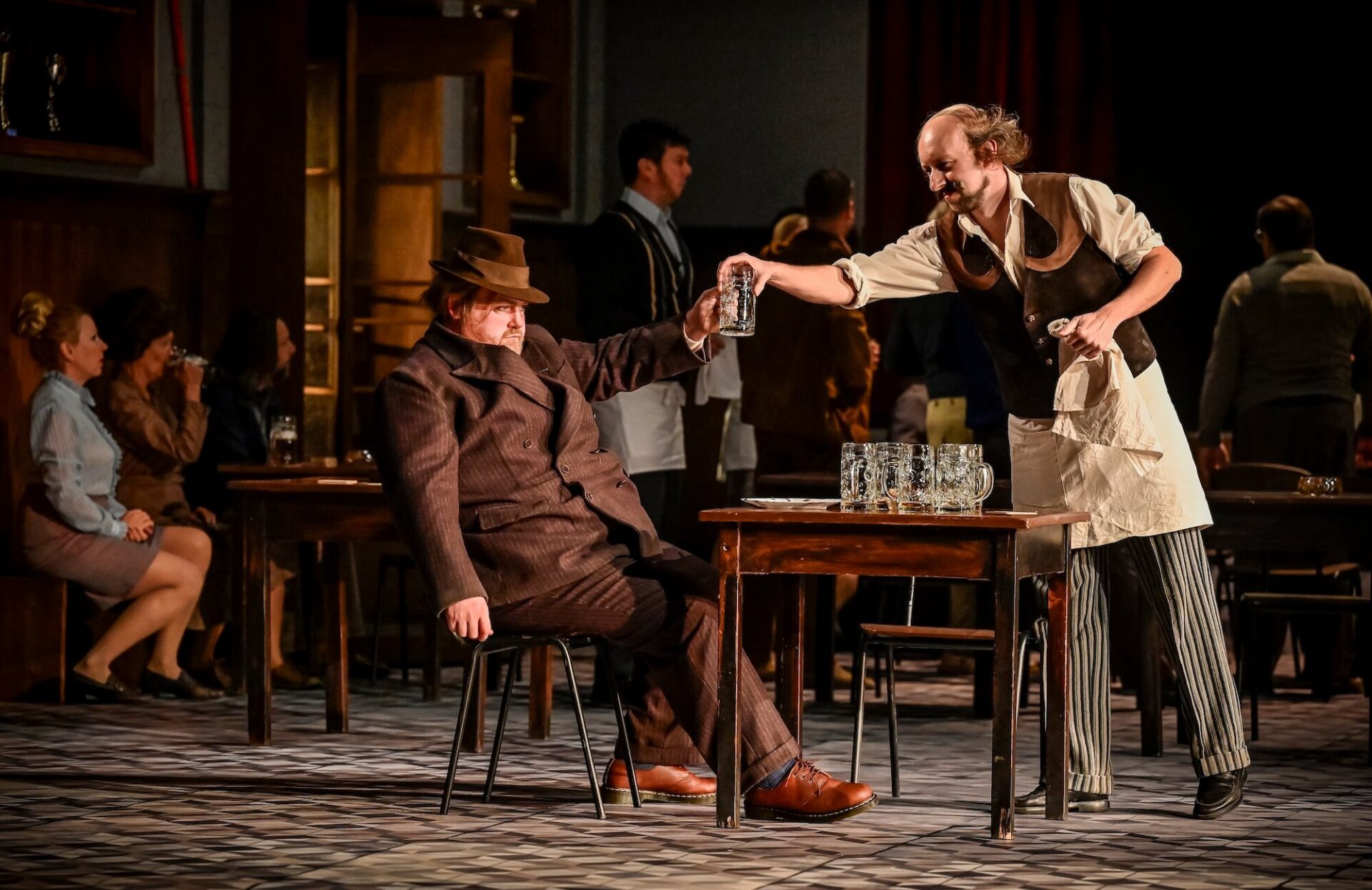
It’s a busy evening at the Vikárka pub in Prague. Mr. Brouček, a local landlord, is more interested in his beer and sausages than in anything else. Málinka, the Sacristan’s daughter, is angry with her boyfriend Mazal, one of Mr. Brouček’s many tenants, because he has been seen dancing with another girl. To make him jealous, Malinka decides to flirt with Mazal’s landlord. Brouček is so drunk that he promises to marry her, but when her father asks him about the marriage, Broucek quickly insists that he was joking and would marry Malinka only if they were both on the Moon.
It’s late and the innkeeper Würfl closes the pub. Only the drunken Brouček is left behind. Before falling asleep, he tells the Moon that he’d rather live up there and avoid all the people who never pay their rent and try to steal his money.
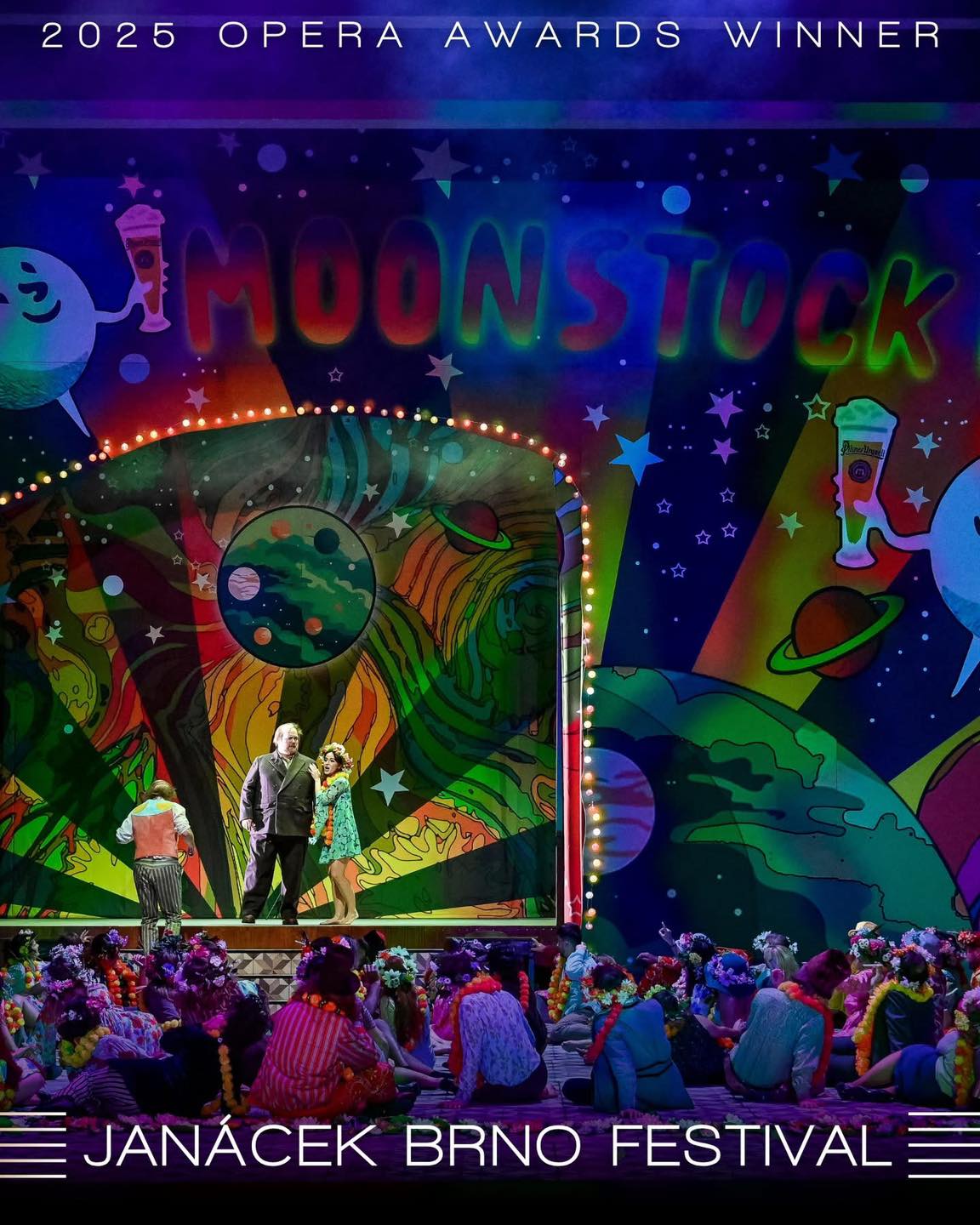
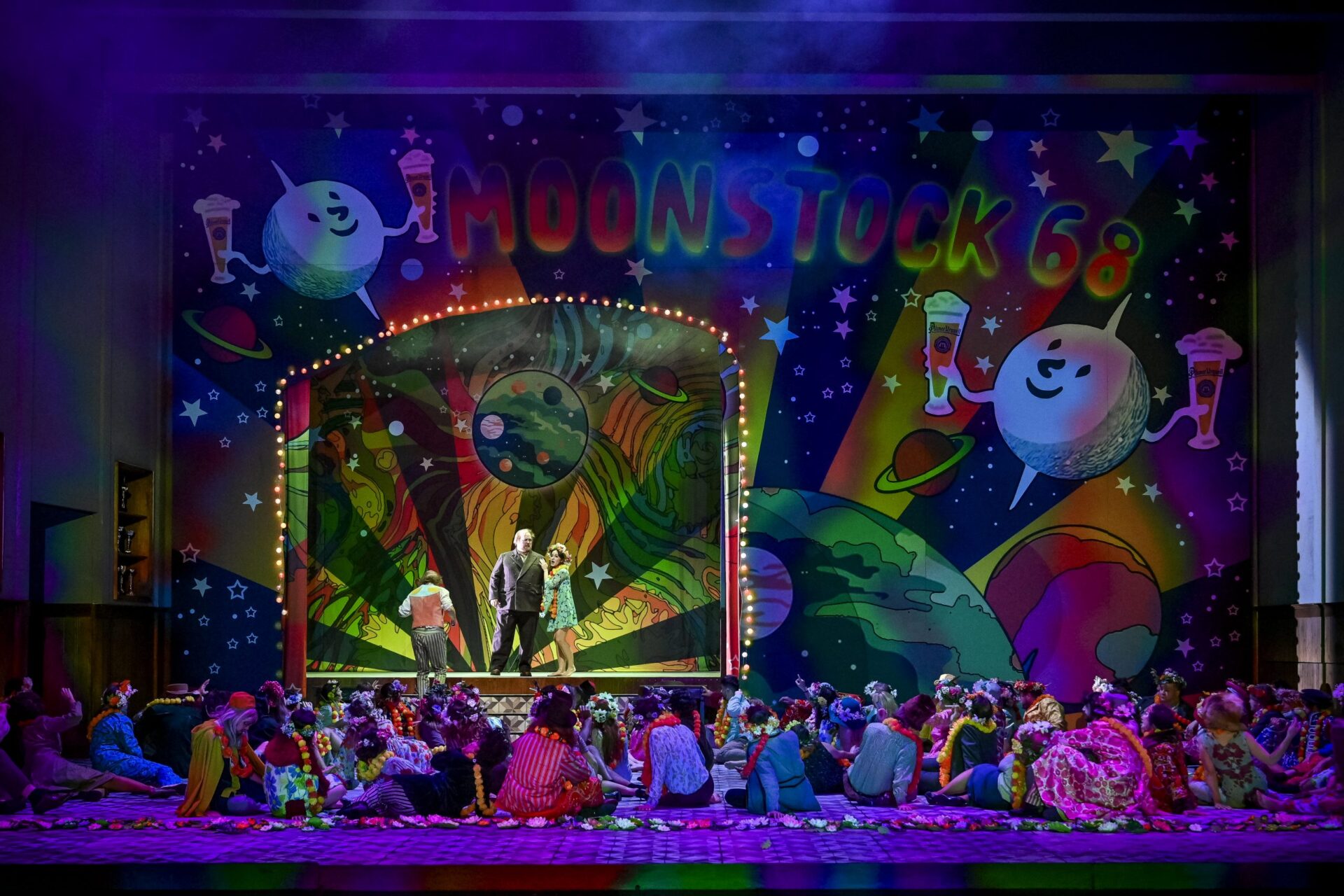
Dreaming he is on the Moon, Brouček recognises some of the Moon dwellers: one of them, called Blankytný, seems very similar to Mazal, while another one, called Etherea, clearly reminds Brouček of Málinka. This same Etherea, led on by her father Lunobor and attended by many Moon maidens, instantly falls in love with Brouček. Helped by the Moon maidens, Etherea manages to abduct the reluctant landlord.
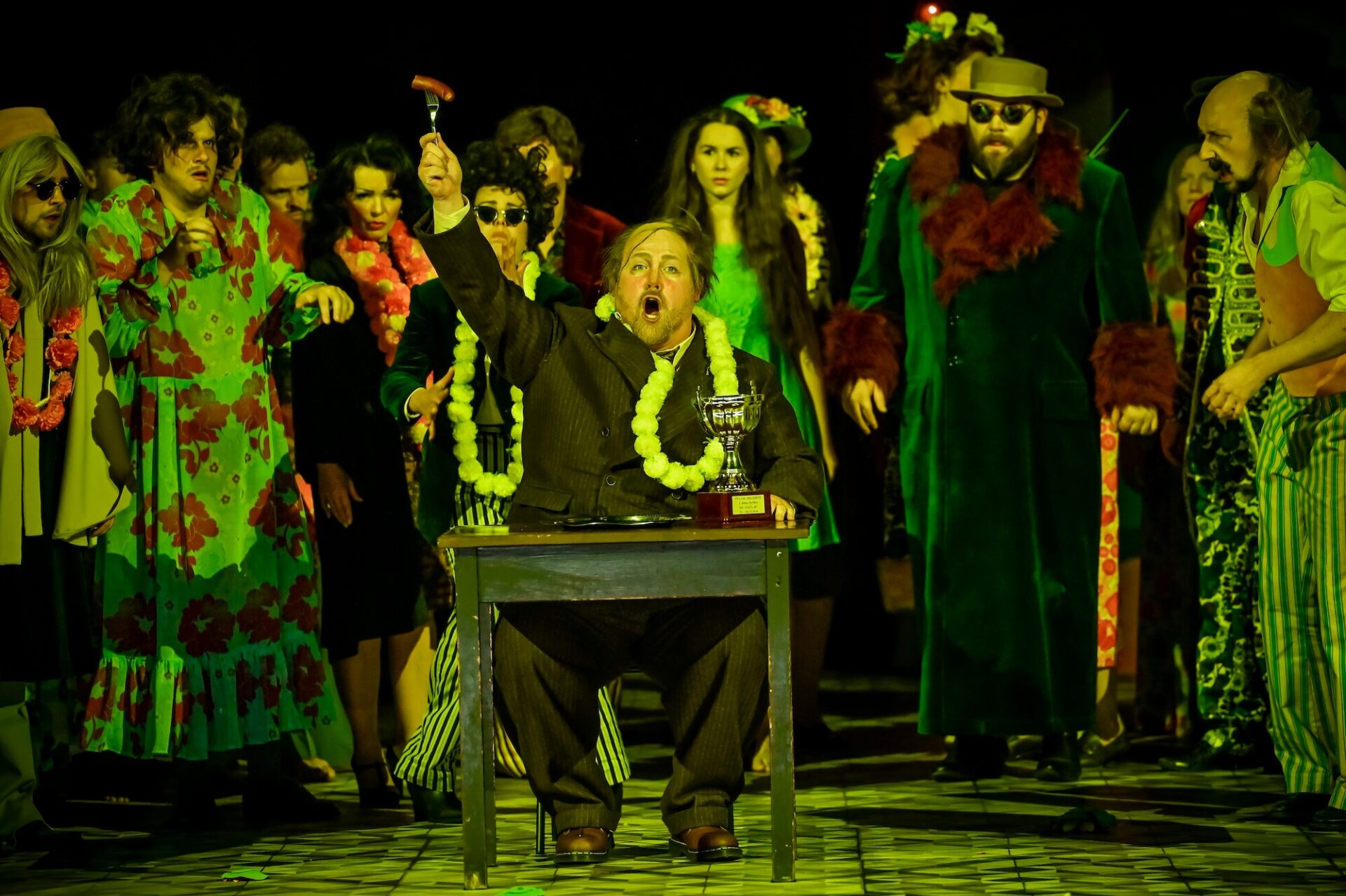
When Etherea re-appears with Brouček, Čaroskvoucí, another inhabitant of the Moon, introduces the strange earthling to all the artists on the Moon, but the hungry and thirsty Brouček is not remotely interested in poetry, music, or art of any kind. The Moon artists live entirely by sniffing flowers, and the famished Brouček disgusts them when he suddenly pulls a sausage out of his pocket. As they leave in horror, Brouček hopes finally to be left alone to eat in peace, but he is prevented by the ever more passionate Etherea…
Brouček’s imaginary visit to the Moon ends back on Earth in the safety of the Vikárka pub where he sleeps peacefully, while Mazal and Malinka make up after their argument…
Part 2
Brouček, in no way discouraged by his adventures on the Moon, has got drunk once again in the Vikárka pub, where he sets off on an even more surprising and dangerous adventure: he now imagines himself in the medieval streets of Prague, caught up with the Czech people as they fight enemy invaders. These patriots, even those whom Brouček recognises, welcome him as a kindred spirit, but Brouček intends to avoid fighting at all costs: he may love his country, its beer and sausages, but he’s not willing to give up his life for them.
When the people of Prague celebrate victory over the enemy, Brouček brags about how bravely he fought, but he is accused of lying to cover up his cowardly behaviour. He is sentenced to be burned alive in a beer barrel when he suddenly wakes up, in the safety of one of the empty beer tanks of the Vikárka pub.
Thrilled to have returned intact from his latest incredible journey, Brouček brags to the innkeeper about his heroic deeds, but implores him to be discreet and not tell anyone about them…
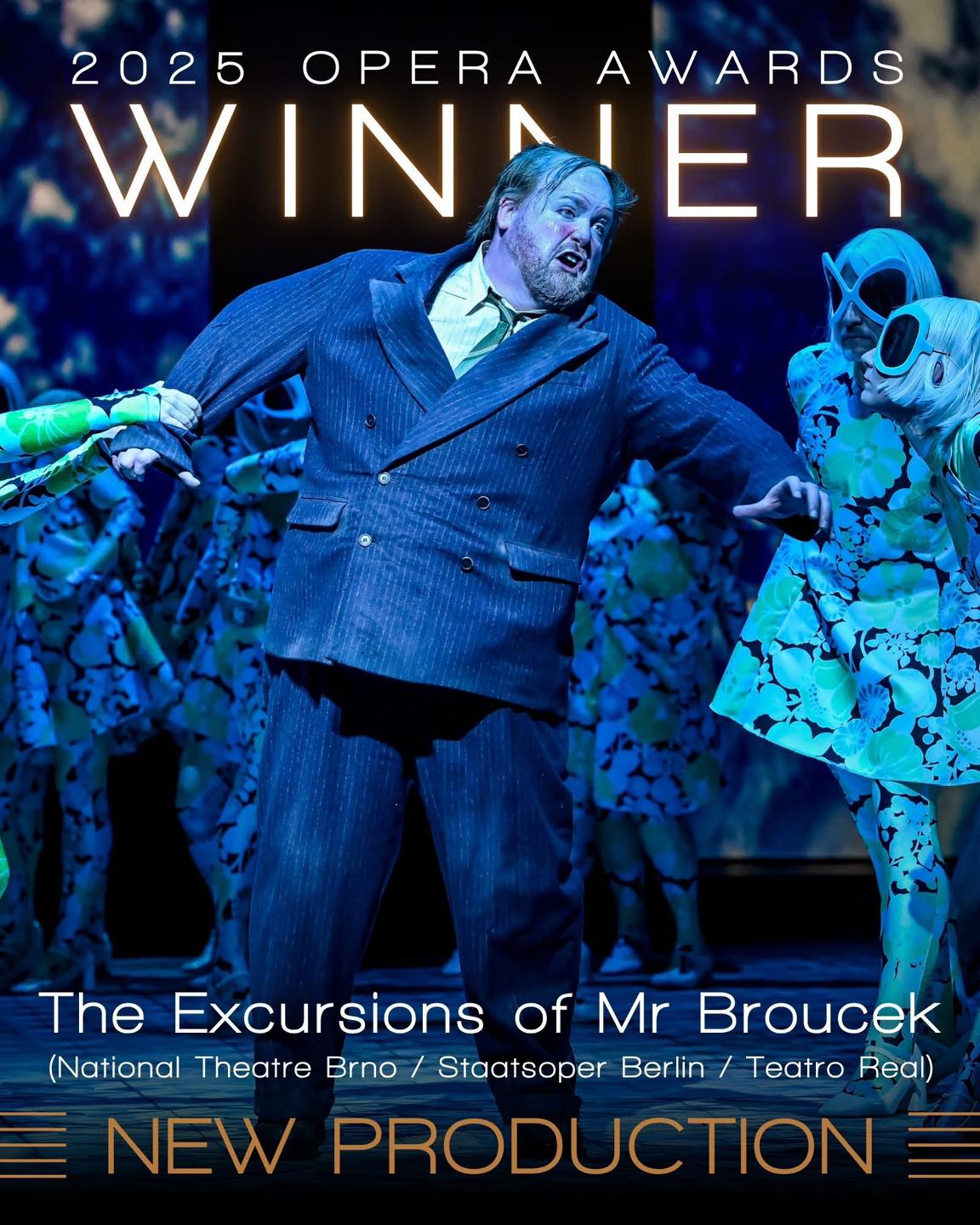
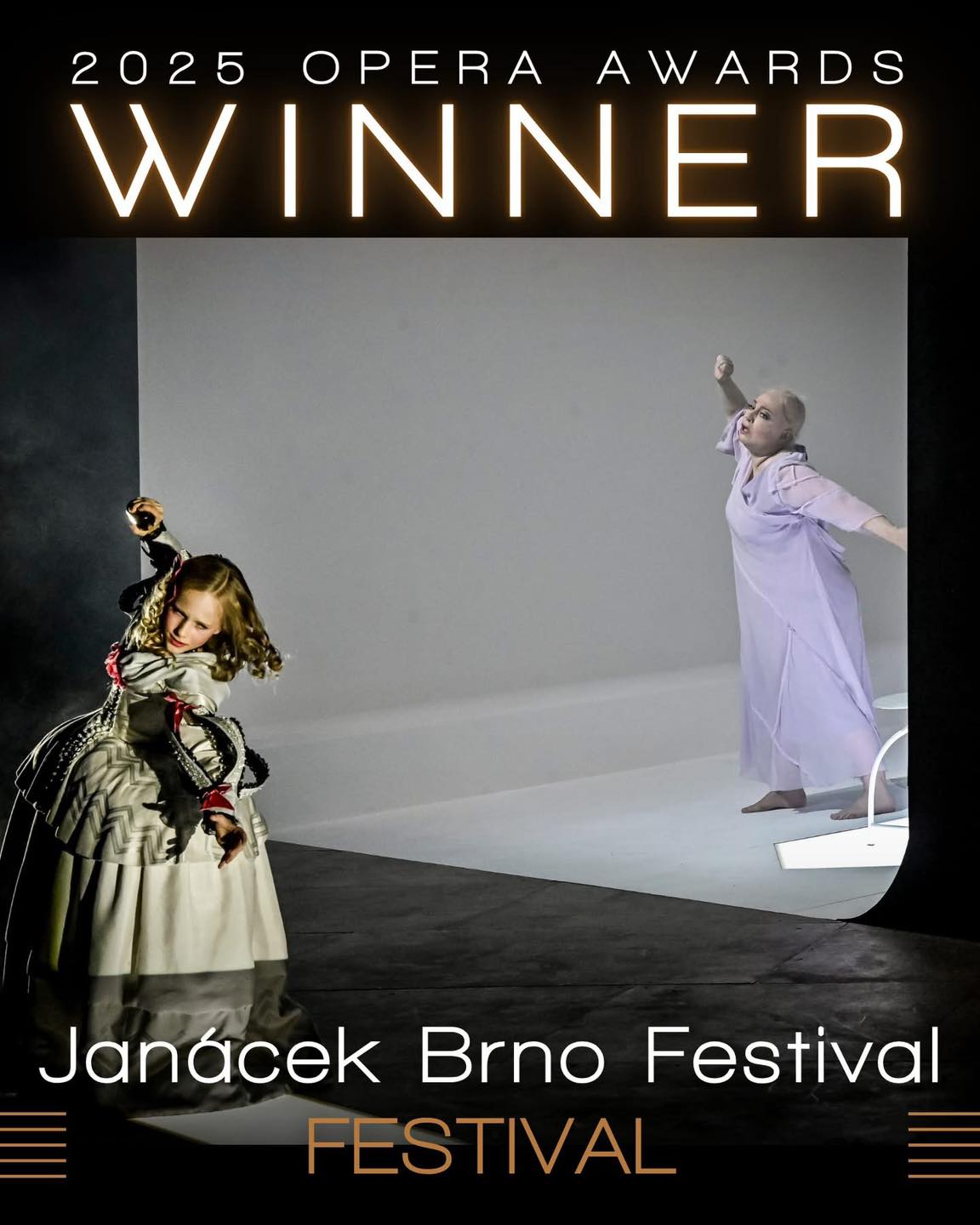
Janáček’s fifth opera, The Excursions of Mr Brouček, opened the 9th edition of the festival, whose motto was Without Borders! The same could be said of the work of Robert Carsen, a director whose productions are admired worldwide for their dramatic approach, poetry, humor, and visual refinement. The famous director’s path first crossed with that of the Czech composer many years ago, and today Carsen has staged six of Janáček’s operas. For the Brno company he created a production of Osud (Destiny) in 2020, and four years later he returned to send Mr Brouček not only to the Moon. Carsen’s production offered an entirely new perspective on Janáček’s rarely performed opera, linking its plot to the historical events of the 20th century that were so crucial for the Czech nation. The fact that the production resonated not only with Czech audiences is confirmed by its shortlisting for the prestigious Opera Award 2025.
None of Janáček’s operas can truly be called comic; though humor is never absent, it appears rather as a rare seasoning. In the opera about a small householder from Prague’s Malá Strana – a typically Czech little man – Janáček brims with humor, though of a sharply pointed kind. He found his inspiration in the popular Brouček novellas by the poet Svatopluk Čech, and he enhanced Čech’s satire with music full of dance rhythms and unusual instruments such as the glass harmonica and bagpipes. If the first part of the opera, the excursion to the Moon, directed its biting humor at Prague’s critics, intellectuals, and artists, then the second part, set in the Hussite period, cut into the less flattering qualities of the Czech nation as a whole.
The opera did not come into being easily – Janáček went through several librettists, and it took nine years before, after all the complications with the libretto, he finally brought The Excursion of Mr Brouček to the Moon to a successful conclusion. At the end of his work, however, he sighed over his verse-writers: “But our poets! One has to tell them everything – and still it turns out poorly!” Nevertheless, he soon decided to expand the opera with one more part, this time an excursion into the 15th century. This he completed quickly with the librettist F. S. Procházka, but from then on Janáček wrote his librettos himself.
Why did he choose Čech’s Mr Brouček in the first place? He explained it beautifully in a letter to Kamila Stösslová:
“So do you know what this Brouček is? A completely ordinary man; he rails against the whole world and wastes his life away with a jug of beer. He is good for nothing. You ask: ‘So why did you choose such a man for an opera?’ Because he should disgust everyone, he should be ridiculed, and he should be a warning! The Russians also had such a ‘soft’ man; his name was Oblomov. In fact, every other Russian was an Oblomov – and where did that lead them! The terrible revolution now washes that away in rivers of blood. That is why I present Brouček – as a warning. We too have more than enough Broučeks all around us! For them, the stomach is everything. So my dear Brouček gets drunk again, falls asleep somewhere on Hradčany, and dreams: He flies to the Moon! He falls there. Oh, horror! The people there feed only on the scent of flowers. They give Brouček only blossoms to smell. And now one Moon-maiden falls in love with him! Bloodless, her body like tow!”
Premiere: 1 November 2024 at the Janáček Theatre
Performed in the original Czech version with Czech, English, and German surtitles.
In co-production with Teatro Real, Madrid and Staatsoper Unter den Linden, Berlin.
The production was made possible with the financial support of the European Union through the National Recovery Plan and the Ministry of Culture of the Czech Republic, facilitated by IDU and PerformCzech.
Director: Robert Carsen
Conductor: Marko Ivanović
Scene: Radu Boruzescu
Costumes: Annemarie Woods
Lights: Robert Carsen / Peter van Praet
Choreography: Rebecca Howell
Dramaturgy: Robert Carsen / Patricie Částková
Chorus director: Martin Buchta (The Excursion of Mr. Brouček to the Moon)
Chorus director: Pavel Koňárek (The Excursion of Mr. Brouček to the 15. Century)
Cast:
Matěj Brouček – Nicky Spence
Mazal / Blankytný / Petřík – Daniel Matoušek
Sacristan at St. Vitus Cathedral / Lunobor / Domšík of the Bell – David Szendiuch
Málinka / Etherea / Kunka – Doubravka Novotná
Würfl / Čaroskvoucí / Councillor – Jan Šťáva
Little Waiter / Child Prodigy / Student: – Andrea Široká
Kedruta – Jana Horáková Levicová
Svatopluk Čech – Daniel Kfelíř
Poet / Cloudy / Vacek Bradatý / Other voice – Tadeáš Hoza
Painter / Duhoslav / Vojta of Peacokcs / Voice of the Professor – Vít Nosek
Composer / Harpoboy / Miroslav the Goldsmith – Ondřej Koplík
First Taborite – Petr Karas
Second Taborite / Another Poet (Moon part) – Pavel Valenta
Part 1
It’s a busy evening at the Vikárka pub in Prague. Mr. Brouček, a local landlord, is more interested in his beer and sausages than in anything else. Málinka, the Sacristan’s daughter, is angry with her boyfriend Mazal, one of Mr. Brouček’s many tenants, because he has been seen dancing with another girl. To make him jealous, Malinka decides to flirt with Mazal’s landlord. Brouček is so drunk that he promises to marry her, but when her father asks him about the marriage, Broucek quickly insists that he was joking and would marry Malinka only if they were both on the Moon.
It’s late and the innkeeper Würfl closes the pub. Only the drunken Brouček is left behind. Before falling asleep, he tells the Moon that he’d rather live up there and avoid all the people who never pay their rent and try to steal his money.
Dreaming he is on the Moon, Brouček recognises some of the Moon dwellers: one of them, called Blankytný, seems very similar to Mazal, while another one, called Etherea, clearly reminds Brouček of Málinka. This same Etherea, led on by her father Lunobor and attended by many Moon maidens, instantly falls in love with Brouček. Helped by the Moon maidens, Etherea manages to abduct the reluctant landlord.
When Etherea re-appears with Brouček, Čaroskvoucí, another inhabitant of the Moon, introduces the strange earthling to all the artists on the Moon, but the hungry and thirsty Brouček is not remotely interested in poetry, music, or art of any kind. The Moon artists live entirely by sniffing flowers, and the famished Brouček disgusts them when he suddenly pulls a sausage out of his pocket. As they leave in horror, Brouček hopes finally to be left alone to eat in peace, but he is prevented by the ever more passionate Etherea…
Brouček’s imaginary visit to the Moon ends back on Earth in the safety of the Vikárka pub where he sleeps peacefully, while Mazal and Malinka make up after their argument…
Part 2
Brouček, in no way discouraged by his adventures on the Moon, has got drunk once again in the Vikárka pub, where he sets off on an even more surprising and dangerous adventure: he now imagines himself in the medieval streets of Prague, caught up with the Czech people as they fight enemy invaders. These patriots, even those whom Brouček recognises, welcome him as a kindred spirit, but Brouček intends to avoid fighting at all costs: he may love his country, its beer and sausages, but he’s not willing to give up his life for them.
When the people of Prague celebrate victory over the enemy, Brouček brags about how bravely he fought, but he is accused of lying to cover up his cowardly behaviour. He is sentenced to be burned alive in a beer barrel when he suddenly wakes up, in the safety of one of the empty beer tanks of the Vikárka pub.
Thrilled to have returned intact from his latest incredible journey, Brouček brags to the innkeeper about his heroic deeds, but implores him to be discreet and not tell anyone about them…
Janáček’s fifth opera, The Excursions of Mr Brouček, opened the 9th edition of the festival, whose motto was Without Borders! The same could be said of the work of Robert Carsen, a director whose productions are admired worldwide for their dramatic approach, poetry, humor, and visual refinement. The famous director’s path first crossed with that of the Czech composer many years ago, and today Carsen has staged six of Janáček’s operas. For the Brno company he created a production of Osud (Destiny) in 2020, and four years later he returned to send Mr Brouček not only to the Moon. Carsen’s production offered an entirely new perspective on Janáček’s rarely performed opera, linking its plot to the historical events of the 20th century that were so crucial for the Czech nation. The fact that the production resonated not only with Czech audiences is confirmed by its shortlisting for the prestigious Opera Award 2025.
None of Janáček’s operas can truly be called comic; though humor is never absent, it appears rather as a rare seasoning. In the opera about a small householder from Prague’s Malá Strana – a typically Czech little man – Janáček brims with humor, though of a sharply pointed kind. He found his inspiration in the popular Brouček novellas by the poet Svatopluk Čech, and he enhanced Čech’s satire with music full of dance rhythms and unusual instruments such as the glass harmonica and bagpipes. If the first part of the opera, the excursion to the Moon, directed its biting humor at Prague’s critics, intellectuals, and artists, then the second part, set in the Hussite period, cut into the less flattering qualities of the Czech nation as a whole.
The opera did not come into being easily – Janáček went through several librettists, and it took nine years before, after all the complications with the libretto, he finally brought The Excursion of Mr Brouček to the Moon to a successful conclusion. At the end of his work, however, he sighed over his verse-writers: “But our poets! One has to tell them everything – and still it turns out poorly!” Nevertheless, he soon decided to expand the opera with one more part, this time an excursion into the 15th century. This he completed quickly with the librettist F. S. Procházka, but from then on Janáček wrote his librettos himself.
Why did he choose Čech’s Mr Brouček in the first place? He explained it beautifully in a letter to Kamila Stösslová:
“So do you know what this Brouček is? A completely ordinary man; he rails against the whole world and wastes his life away with a jug of beer. He is good for nothing. You ask: ‘So why did you choose such a man for an opera?’ Because he should disgust everyone, he should be ridiculed, and he should be a warning! The Russians also had such a ‘soft’ man; his name was Oblomov. In fact, every other Russian was an Oblomov – and where did that lead them! The terrible revolution now washes that away in rivers of blood. That is why I present Brouček – as a warning. We too have more than enough Broučeks all around us! For them, the stomach is everything. So my dear Brouček gets drunk again, falls asleep somewhere on Hradčany, and dreams: He flies to the Moon! He falls there. Oh, horror! The people there feed only on the scent of flowers. They give Brouček only blossoms to smell. And now one Moon-maiden falls in love with him! Bloodless, her body like tow!”
Premiere: 1 November 2024 at the Janáček Theatre
Performed in the original Czech version with Czech, English, and German surtitles.
In co-production with Teatro Real, Madrid and Staatsoper Unter den Linden, Berlin.
The production was made possible with the financial support of the European Union through the National Recovery Plan and the Ministry of Culture of the Czech Republic, facilitated by IDU and PerformCzech.