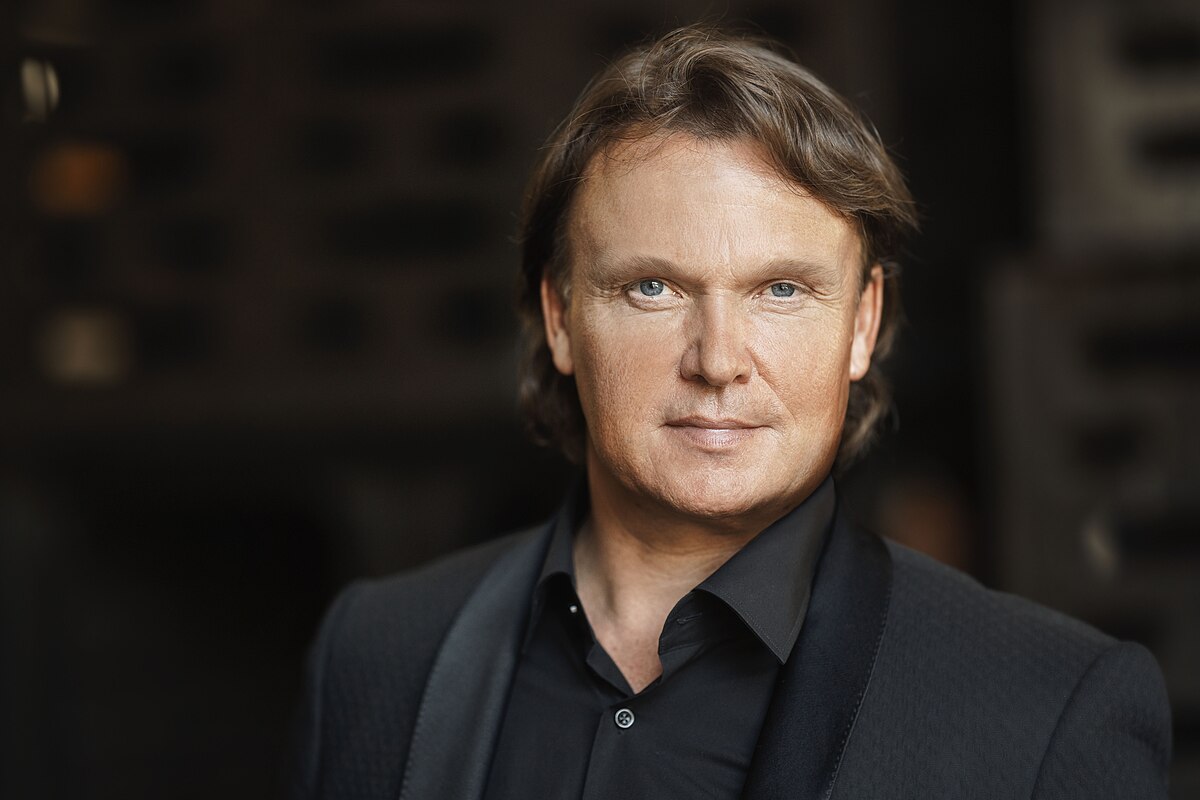





11. 11. 2026, 7 p.m.
Mahen Theatre
Conductor: Christopher Ward
Ensemble and Orchestra: National Theatre Prague
11. 11. 2026
7 p.m.
Mahen Theatre
Conductor: Christopher Ward
Ensemble and Orchestra: National Theatre Prague

Josef Suk: Fairy Tale, Op. 16 / Suite for large orchestra on themes from the music to Julius Zeyer’s dramatic fairy tale Radúz and Mahulena
Leoš Janáček: Šárka (concert performance), JW I/1 / Opera in three acts on the musical drama by Julius Zeyer
Cast:
Šárka: Mária Porubčinová
Ctirad: Aleš Briscein
Přemysl: Svatopluk Sem
Lumír: Daniel Matoušek
Only ten years separate Janáček’s operatic debut and Suk’s Fairy Tale. What unites them is not only the figure of the writer, dramatist, and poet Julius Zeyer, but also the world of Slavic mythology.
Josef Suk (1874–1935) began composing incidental music to Zeyer’s dramatic fairy tale Radúz and Mahulena at the author’s request in 1897, creating one of his most successful and most beautiful works. Suk imbued Zeyer’s play with delicate lyricism, striking sonority, and uncommon dramatic power. Its premiere in 1898 brought great acclaim to both artists and won admiration from Suk’s teacher and future father-in-law, Antonín Dvořák. Despite the success of the staged production, Suk did not expect the play with orchestra to be performed regularly, and so in 1899 he arranged the music into a four-movement suite entitled Fairy Tale. Although the term “Art Nouveau” is rarely used in music history, Suk’s music for Radúz and Mahulena would be a beautiful example of it.
Ten years earlier, in 1887, the young Janáček had begun work on his first opera, Šárka. For the libretto, he was advised to use a text with a theme from Czech mythology, authored by Julius Zeyer. Janáček eagerly set to work and within a few months had composed the opera, though only in piano score. He then asked his friend and mentor Antonín Dvořák for his opinion—and Dvořák praised the work. Only then did Janáček dare to seek Zeyer’s permission to set his “musical drama” to music, but the renowned poet refused. Nevertheless, Janáček continued working on the opera, making dramaturgical adjustments, substantially revising the vocal parts, and orchestrating the first two acts. Once he realized that Zeyer would remain adamant, he set the opera aside for many years. He returned to it only in 1919, when he revised the vocal parts and entrusted the orchestration of the third act to his pupil Osvald Chlubna. The long-delayed premiere, almost forty years late, finally took place in 1925 and was met with great acclaim. It is a work that in many ways foreshadows the compositional approach of Janáček’s mature operas. The composer himself valued his first opera highly, writing in 1924: “My Šárka? Everything in it is so close to my latest works!”